LWS Recommends Real Estate Sector to Prioritize Eco-Friendly Construction Materials
"LWS" advises the "real estate sector" to prioritize the selection of construction materials that reduce greenhouse gas emissions by considering the Environmental Product Declaration (EPD) labels to meet the goals of developing environmentally friendly projects.

Mr. Prabhan Sak Raksaiwan, Managing Director of LWS Wisdom and Solutions Public Company Limited, a research and development company in the real estate sector under the LP.N Development Public Company Limited, recommends that the real estate sector develop residential projects with a focus on using construction materials that reduce greenhouse gas emissions. This includes materials that have an Environmental Product Declaration (EPD), which provides information about the environmental impact of various materials throughout the product's life cycle (Life Cycle Assessment - LCA) using ISO 14025 and EN 15804 standards.
Although the EPD is not a direct certification that the material is environmentally friendly, it provides information that helps designers, architects, and project owners compare the impacts of different materials and choose sustainable options based on data. Carbon Emission, or the release of carbon dioxide (CO₂), is one of the key indicators showing the environmental impact of materials, particularly regarding Global Warming Potential (GWP).
In summary, the EPD specifies the carbon emissions of materials at each stage of the life cycle, allowing for the analysis and selection of materials that help reduce Carbon Footprint.
How are EPD and Carbon Emission Related?
The EPD uses the Life Cycle Assessment (LCA) principle to analyze the impacts of materials in six main stages:
1. Raw Material Extraction (A1) – The process of extracting raw materials.
2. Transport to Factory (A2) – The transportation of raw materials to the factory.
3. Manufacturing (A3) – The production process of materials.
4. Construction & Installation (A4-A5) – Transportation and installation at the construction site.
5. Use Phase (B1-B7) – The usage and maintenance of materials.
6. End-of-Life (C1-C4) – The demolition and waste management of materials.
The EPD specifies CO₂ emissions in each phase, allowing for accurate calculations of Carbon Emission for construction projects. With Carbon Footprint data from the EPD, designers can choose materials with low CO₂ emissions, supporting green building certifications and Net Zero Carbon policies. Currently, the EPD is a crucial tool for reducing Carbon Emission in the construction industry and supports various sustainable building criteria such as LEED, WELL Building Standard, and the Net Zero Carbon Building Initiative.
Examples of construction materials with EPD that help reduce Carbon Emission include:
1. Low-Carbon Concrete, which uses cement that reduces CO₂ (such as Portland Limestone Cement, PLC) mixed with fly ash or ground granulated blast-furnace slag (GGBS) instead of traditional cement, can reduce Carbon Emission by up to 30-50% compared to regular concrete.
2. Recycled Steel, made from over 90% recycled scrap steel, can reduce energy use in the production process by more than 75% compared to steel made from iron ore.
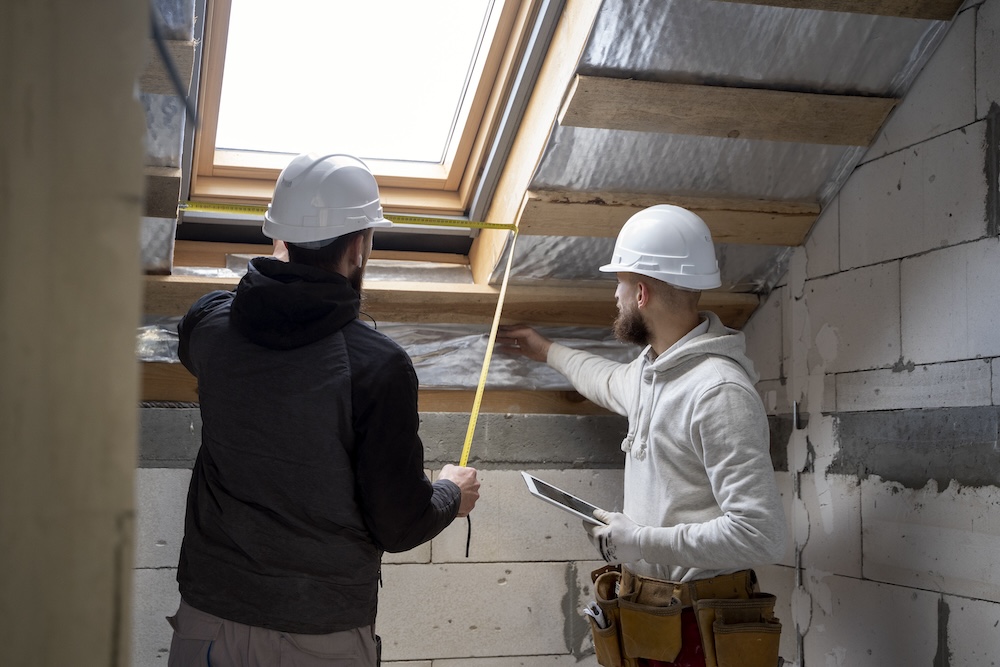
3. Low GWP insulation materials, such as using Mineral Wool or Cellulose Insulation instead of foam insulation that uses CFCs, will reduce long-term Carbon Emission impacts by saving energy for heating and cooling.
4. FSC-Certified Wood, which absorbs CO₂ from the atmosphere. Using Cross Laminated Timber (CLT) can reduce the use of concrete and steel, which are high CO₂ emitting materials.
Therefore, the EPD is an essential tool for measuring the Carbon Emission of construction materials, enabling projects to select materials with low CO₂ emissions to minimize environmental impact, support green building certifications like LEED, WELL, and Net Zero Carbon Building, and help combat global warming, leading the construction industry towards true sustainability.
Thus, choosing construction materials with EPD is not just about compliance with standards but also a significant step towards creating a more environmentally friendly future,” Mr. Prabhan Sak concluded.